
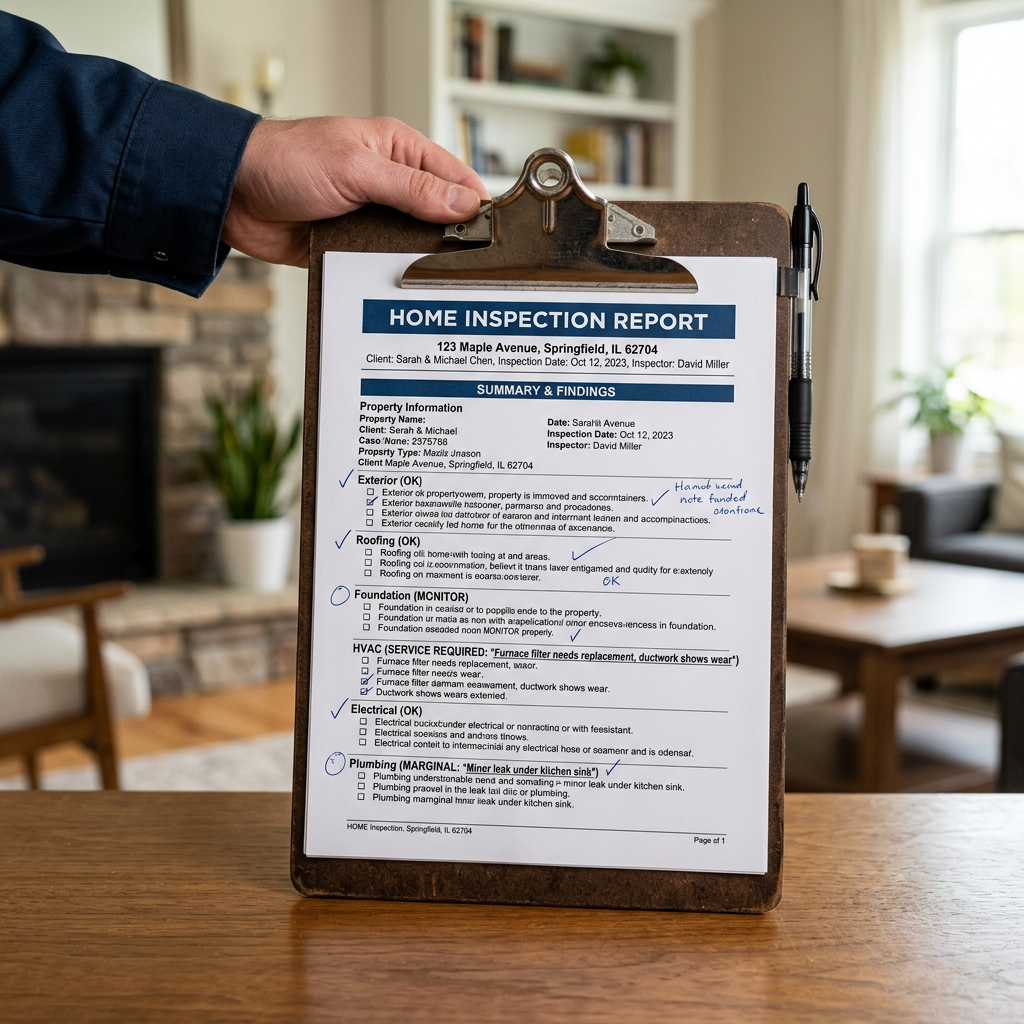
What is a Home Inspection Report?
A home inspection report is a detailed, written document prepared by a licensed professional that outlines a property’s physical condition, including its structure, systems, and components. It provides photos and descriptions of defects, safety issues, and repairs needed, allowing buyers to make informed decisions and often negotiate repairs. [1, 2, 3]
Key Components of a Home Inspection Report
- Structural Components: Assessment of the foundation, walls, framing, and roof.
- Major Systems: Detailed check of HVAC (heating/cooling), plumbing, and electrical systems.
- Exterior Features: Evaluation of siding, doors, windows, gutters, and walkways.
- Interior Features: Inspection of walls, ceilings, floors, insulation, and ventilation.
- Safety Hazards: Identification of potential dangers such as mold, radon, asbestos, or electrical hazards. [1, 2, 3, 4]
What to Look for in the Report
- Executive Summary: Many reports start with a summary highlighting major, expensive problems or safety issues.
- Photos and Documentation: Detailed images of identified defects for clarity.
- Deficiency Identification: Items that are broken, unsafe, or at the end of their life expectancy. [1, 2, 3, 4, 5]
Purpose of the Report
- Negotiation Tool: Helps buyers negotiate repairs or price reductions with sellers.
- Informed Decision Making: Identifies issues that may not be apparent to the average buyer, such as hidden water damage or outdated wiring.
- Safety Check: Protects the buyer from immediate dangers or significant future expenses. [1, 2, 3, 4, 5]
How to Read a Home Inspection Report
Reading a home inspection report involves focusing on the summary section for major safety hazards, structural defects, and high-cost repairs (HVAC, roof, plumbing) first. Prioritize red-coded or “immediately” actionable items, use photos for context, and consult with your realtor to prioritize repairs, separating major issues from minor maintenance notes. [1, 2, 3, 4, 5]
Here is a guide to interpreting the report:
1. Key Sections to Review
- The Summary/Actionable Items: This is the most crucial part. It highlights major issues, structural concerns, and safety hazards.
- Comments/Deficiency Codes: Understand the key: Usually, S indicates a safety concern, R means repair needed, and D indicates a defect.
- Photos and Descriptions: Use photos to understand the severity and exact location of a problem.
- Systems Breakdown: Detailed sections on the roof, foundation, HVAC, electrical, and plumbing systems. [1, 2, 3, 4]
2. Identifying Red Flags
Focus on issues that indicate immediate danger or high costs: [1, 2]
- Structural issues: Foundation cracks, sagging rooflines, or water damage.
- Safety Hazards: Lack of GFCI protection, outdated electrical wiring (e.g., aluminum wiring), or broken smoke detectors.
- Environmental hazards: Mold, asbestos, or lead paint.
- Major systems failure: An old HVAC system or a leaky roof. [1, 2, 3, 4, 5]
3. Prioritizing Findings
- Immediate Action Required: Safety risks (e.g., exposed wiring) or active, major leaks.
- Significant Repairs: Items that cost a lot to fix, like replacing a water heater or structural repairs.
- Maintenance Items: Minor issues or expected wear and tear for the age of the house, which may not be worth negotiating. [1, 2, 3, 4, 5]
Common Findings in Home Inspection Reports
Common home inspection reports frequently reveal issues with roofs (leaks, damaged shingles), outdated electrical wiring (undersized panels, lack of GFCI), aging HVAC systems, plumbing leaks, and foundation movement. Poor water drainage, damaged gutters, and signs of moisture (mold/mildew) are also extremely common findings that can affect safety and structural integrity. [1, 2, 3, 4]
Here are the most common findings organized by category:
1. Water Management and Drainage [1]
- Poor Grading: Soil sloping toward the house instead of away, causing water to pool around the foundation.
- Gutter Issues: Missing extensions, downspouts directing water to the foundation, or clogged gutters.
- Moisture Intrusion: Evidence of leaks, including stains on ceilings and walls, or basement/crawlspace dampness. [1, 2, 3, 4, 5]
2. Roof and Attic [1]
- Damaged/Old Shingles: Missing, cracked, or curling shingles.
- Improper Flashing: Poorly installed flashing around chimneys and vents, leading to leaks.
- Ventilation Issues: Insufficient attic ventilation, causing heat and moisture buildup. [1]
3. Electrical Systems
- Outdated/Unsafe Wiring: Presence of knob-and-tube or aluminum wiring.
- GFCI Protection: Lack of Ground Fault Circuit Interrupter (GFCI) outlets near water sources (kitchen, bathrooms, exterior).
- Electrical Panel Issues: Double-tapped breakers (two circuits on one breaker) or undersized service panels. [1, 2, 3]
4. Structural Concerns
- Foundation Cracks: Cracks in foundation walls or slabs, particularly horizontal ones which can indicate serious movement.
- Settling Issues: Sticking doors, windows, or uneven floors. [1, 2, 3]
5. HVAC and Plumbing
- HVAC Aging: Dirty filters, poor maintenance, or systems over 10–15 years old.
- Plumbing Leaks: Leaky pipes under sinks or in the crawlspace.
- Water Heater Problems: Old or incorrectly installed water heaters. [1, 2, 3]
6. Safety Hazards
- Safety Features: Missing or non-functional smoke and carbon monoxide detectors.
- Stair Hazards: Handrails that are missing or improperly installed. [1, 2, 3]
Making Decisions Based on the Report
Making decisions based on a home inspection report involves prioritizing safety hazards and structural issues over cosmetic items, collaborating with a realtor to negotiate repairs or credits. Key steps include thoroughly reading the summary, obtaining expert evaluations for major problems, and deciding whether to proceed, renegotiate, or walk away. [1, 2, 3, 4, 5]
Prioritize Findings in the Report [1]
- Structural/Major Systems: Focus on foundational issues, roofs, plumbing, electrical, and HVAC systems.
- Safety Hazards: Prioritize items that are fire hazards, structural dangers, or health threats (e.g., radon, asbestos).
- Water Damage: Look for signs of active leaks or past water intrusion.
- Minor/Cosmetic Defects: These are common and usually not worth stalling a transaction over. [1, 2, 3, 4, 5, 6]
Actionable Steps After Reviewing the Report
- Consult Your Agent: Discuss which items are worth requesting the seller to fix.
- Call the Inspector: Clarify confusing items or request more information on a finding.
- Get Expert Opinions: Get additional inspections from specialists (e.g., structural engineer, electrician) if necessary.
- Get Cost Estimates: Get quotes from contractors to know the exact cost of repairs to use in negotiations. [1, 2, 3, 4, 5]
Negotiation Strategies
- Repair Addendum: Ask the seller to repair specific, high-priority items before closing.
- Closing Cost Credit: Ask for a credit to cover repairs, which allows you to hire your own contractor after closing.
- Price Reduction: Negotiate a lower purchase price to account for aging systems or necessary repairs.
- Walk Away: If the inspection reveals significant structural or safety issues that the seller refuses to fix, it may be time to walk away. [1, 2, 3, 4]
Key Considerations